
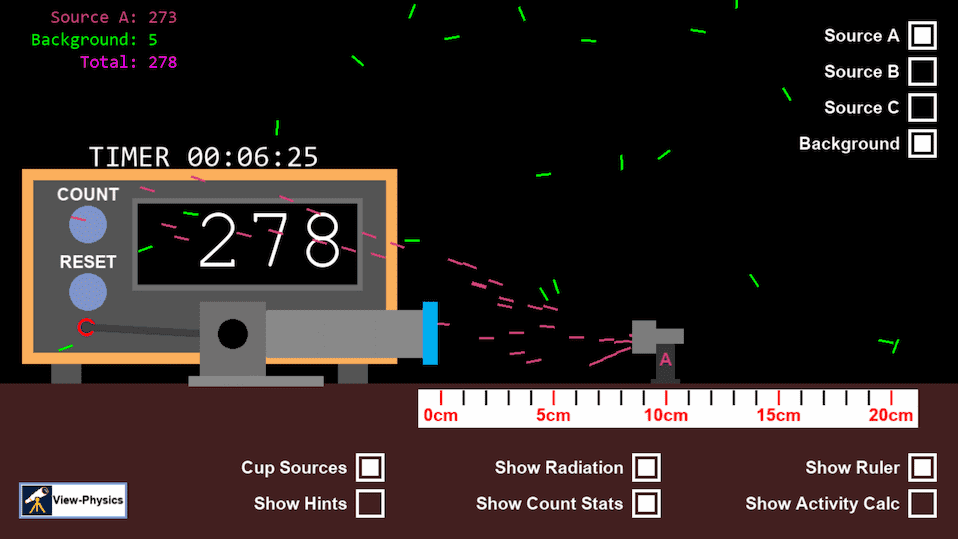
Use a simulation geiger counter to measure the activity rates of different sources, taking into account background radiation and control variables.
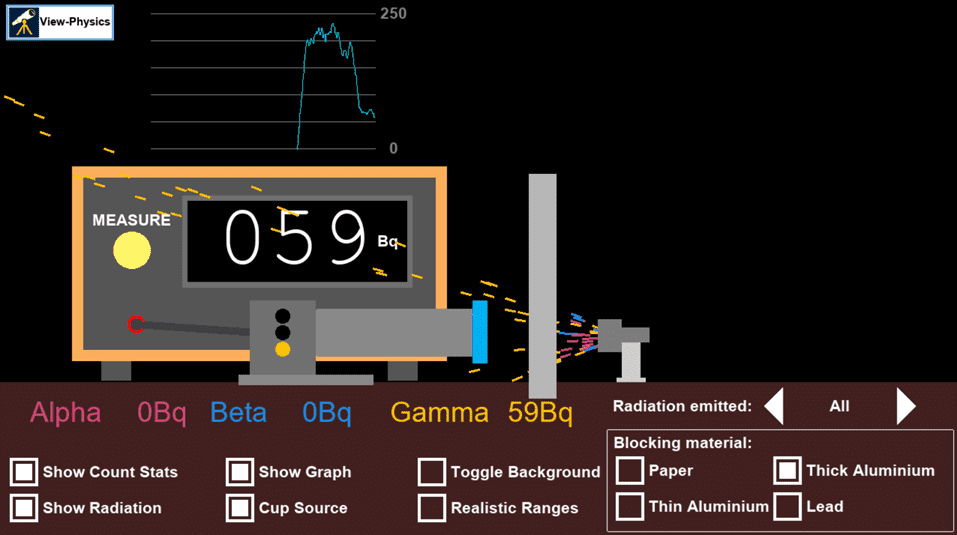
Observe how a geiger counter picks measures alpha, beta-minus and gamma radiation, and how these may be blocked by different materials.
You can also see the effects of moving the source closer/further to the GM-tube, and how background radiation affects the readings.
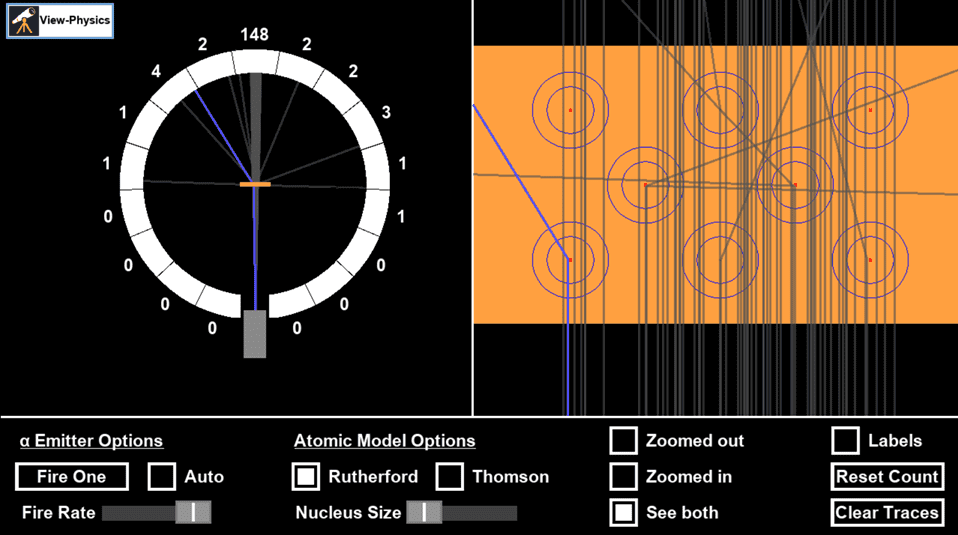
The experiment that discovered the nucleus of an atom. You can see the difference in the results depending on if there is a nucleus or not, and how large the nucleus is.
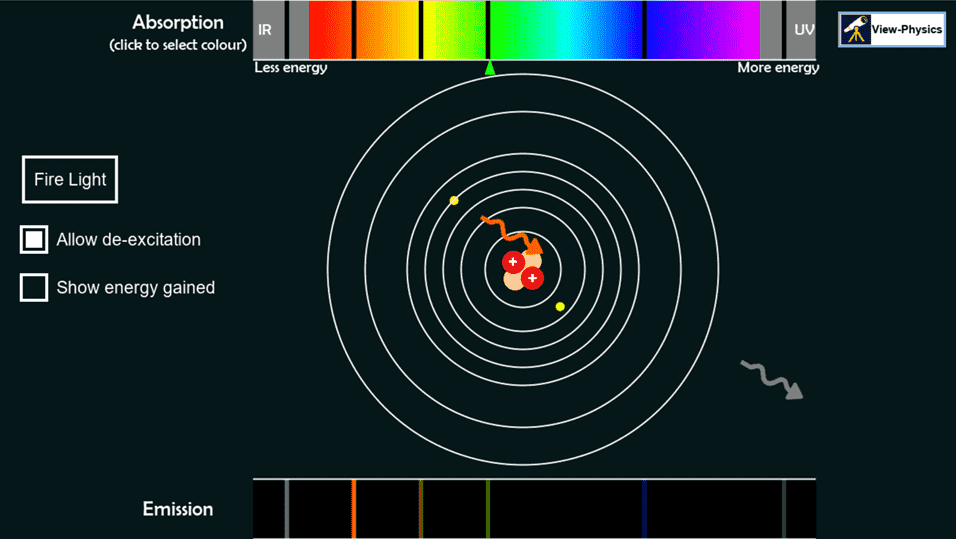
Show how atoms can only absorb (or emit) certain colours of light based on the movement of electrons between energy levels.
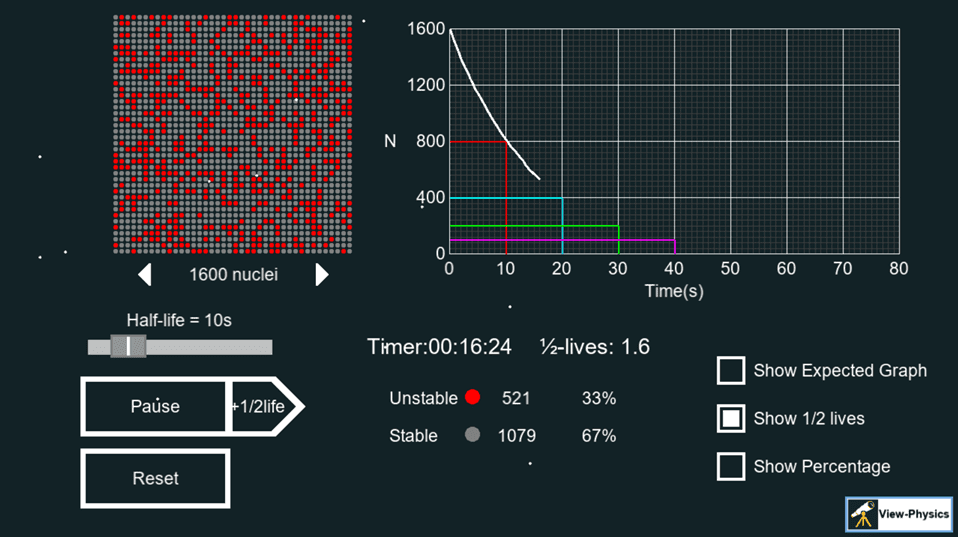
See how the half-life of a source affects its rate of decay.
You can graph this and see how close your results come to the expected results, and see the affect that the number of nuclei in the sample has on the accuracy.
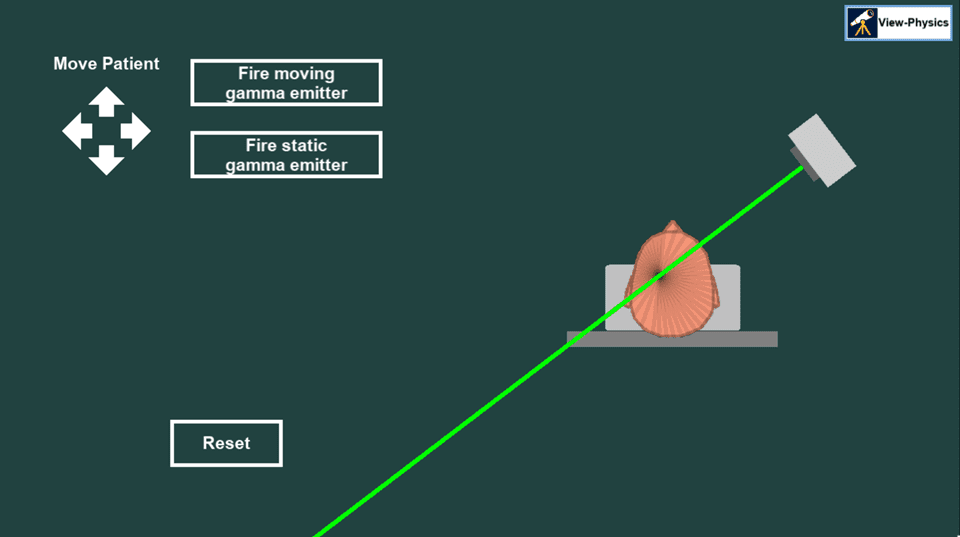
A representation of how external gamma rays are used to treat a tumour.
You can see the difference between a static source and a rotating source.
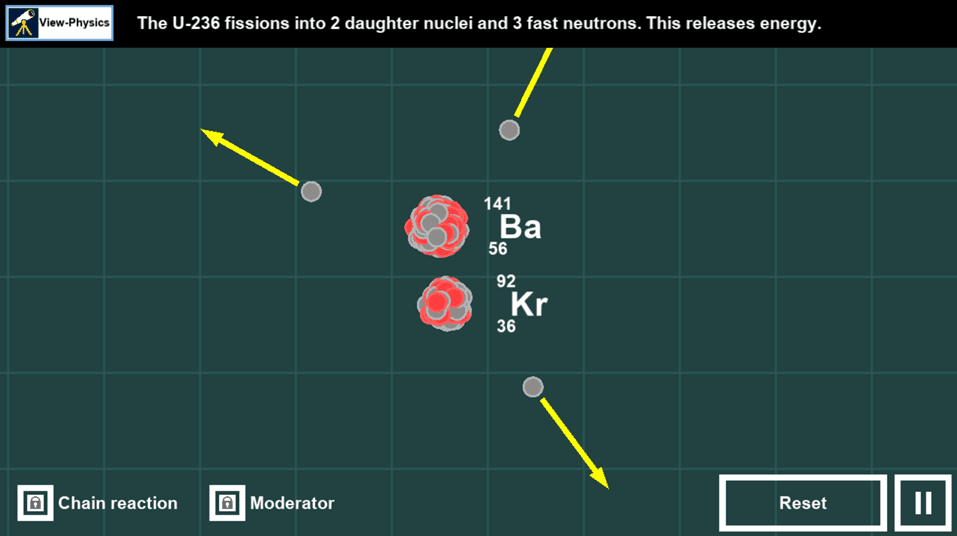
An interactive showing the fission of Uranium-235 via a neutron.
It also shows why a slow-moving neutron is necessary, why a fission reactor needs a moderator and a chain reaction.
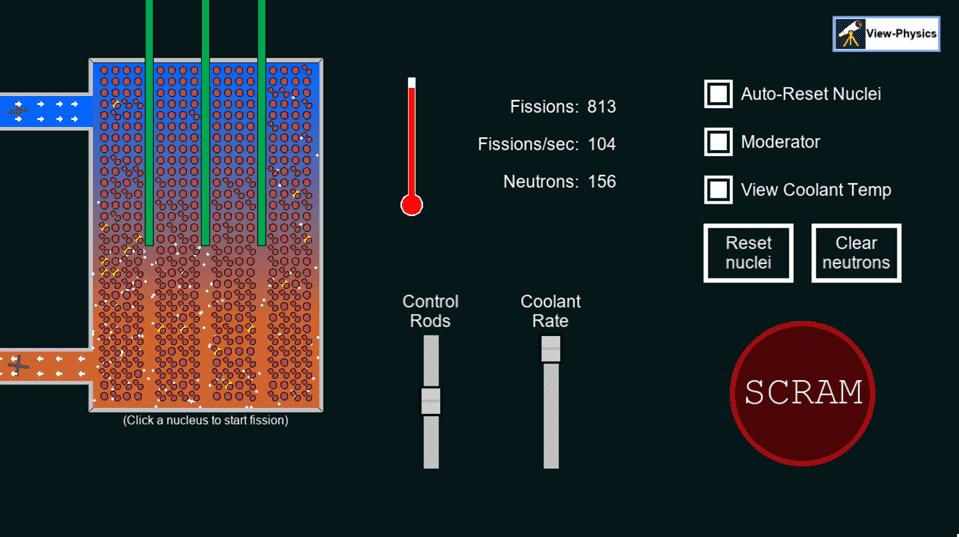
A model of a nuclear fission reactor, with control rods, moderator and a chain reaction.
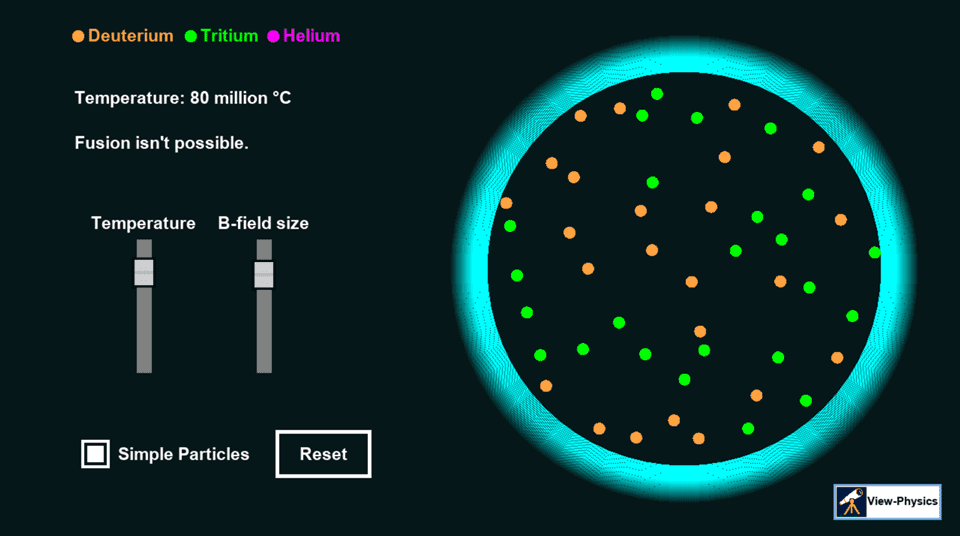
A model of a nuclear fusion reactor with magnetic containment.
You can change the size of the B-field and the temperature of the reactor to see the conditions needed for fusion to occur.